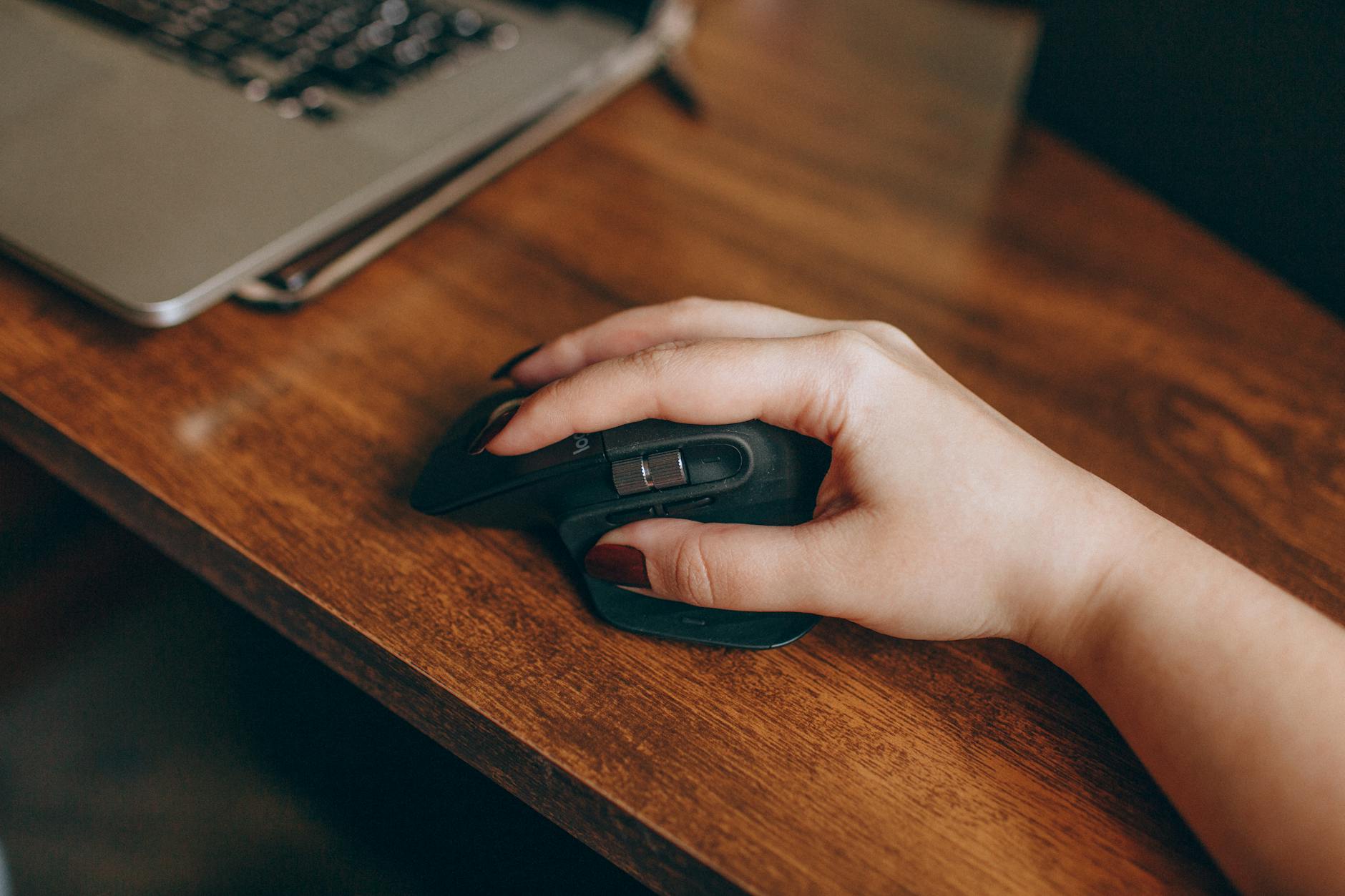
Should a lefty buy a true left-handed mouse or an ambidextrous one? For most lefties, an ambidextrous mouse is the better answer — wider selection, lower prices, and side buttons remappable in software.
Choose a true left-handed mouse only if you grip with a hard claw or palm style and want contoured ergonomics for long sessions. For most office and casual gaming use, ambidextrous wins on availability alone.
The TL;DR
| Use case | Recommendation |
|---|---|
| Casual / office | Ambidextrous |
| Competitive FPS gaming | Ambidextrous (esports favorite) |
| MMO / button-heavy gaming | True left-handed |
| Long workday with palm grip | True left-handed |
| Travel / portable | Ambidextrous |
| Budget under $40 | Ambidextrous |
What "ambidextrous" actually means in mouse design
An ambidextrous mouse has a symmetrical shape — left and right sides mirror each other. The buttons under your index and middle fingers are still physically right-and-left-click, but most modern ambidextrous mice can be remapped in software so the right-click is on the left, the left-click on the right.
The side buttons are where it gets messier. True ambidextrous mice put side buttons on both sides. Many "symmetrical" mice only put them on one side (usually the left, designed for right-handers' thumbs), which means as a lefty you either reach across with your ring finger or do without.
Check the product photos before buying. "Ambidextrous shape" doesn't always mean "ambidextrous buttons."
True left-handed mice: a shrinking list
Dedicated left-handed mice — molded specifically for the left hand, with a contoured palm rest and thumb groove on the correct side — are increasingly rare. The current short list of mainstream options:
- Logitech MX Master 3S for Mac (left-handed variant) and ergonomic competitors — productivity focus, good for long workdays
- Razer DeathAdder V3 (left-handed) — gaming, hard to find but the most-requested lefty gaming mouse
- Razer Naga Left-Handed Edition — MMO mouse with the 12-button thumb grid on the correct side
- Specialty ergonomic vendors — Evoluent and Anker make vertical mice with left-handed variants for RSI prevention
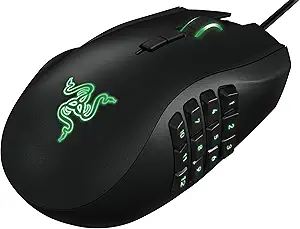
Razer Naga Left-Handed Programmable Mouse
An MMO gaming mouse shaped for the left hand, with 12 programmable thumb buttons.
These run $50 to $130. For a wider look at gaming options specifically, see our roundup of the best left-handed gaming mice.
Why grip style decides the answer
Three grip styles, three different recommendations.
Palm grip. Your whole hand rests on the mouse, fingers flat. The mouse's contour matters most here — your hand is committed to its shape for hours at a time. Palm grippers benefit most from a true left-handed mouse, because an asymmetric right-handed shape will press uncomfortably against the wrong fingers.
Claw grip. Fingers arched, palm partly off the mouse. Less of the hand touches the body, so shape matters less. Most claw grippers do fine with ambidextrous mice.
Fingertip grip. Only fingertips touch the mouse, palm completely off. Shape is almost irrelevant. Buy on weight and sensor performance, not handedness contour.
If you don't know your grip style, look at your hand on the mouse you're using right now. If your palm is fully resting on the body, you're a palm gripper.
Gaming vs office work
For competitive FPS gaming (Counter-Strike, Valorant, Apex), ambidextrous is the dominant shape across pro players — including the right-handed ones. Brands like Zowie, Logitech (G Pro X Superlight), Razer (Viper), and Pulsar all build their flagship esports mice in symmetrical shapes. As a lefty, you're not at a disadvantage; you're shopping the same tier as everyone else.
For MMO and RPG gaming with button-heavy demands (World of Warcraft, Final Fantasy XIV), the equation flips. Side-button placement matters intensely. A right-handed Naga or Logitech G600 with the thumb grid on the wrong side is functionally unusable for a lefty. Buy a true left-handed model or accept fewer buttons.
For office work, ambidextrous wins on price and availability. The remapping is a one-time setup and you forget about it.
The software side
Both Windows and macOS let you swap left and right click at the OS level — no software install required. Manufacturer software (Logitech G HUB, Razer Synapse, Corsair iCUE) goes further: per-app profiles, side-button remapping, even sensitivity adjustments per game.
Two practical notes:
- Public computers and travel. If you frequently use other people's machines or hot-desk, your custom remap doesn't follow you. Some lefties just learn to use right-handed defaults at work to avoid the friction.
- Onboard memory matters. Mice that store profiles on the device itself (most Logitech and Razer flagships do) keep your remap when you plug into another computer. Cheaper mice don't.
Ergonomics and vertical mice
If you're getting wrist or forearm pain from long mouse use, the answer probably isn't a left-handed mouse — it's a vertical mouse, in left-handed orientation.
Vertical mice (Evoluent, Anker, Logitech MX Vertical) hold your hand in a handshake position rather than flat. The reduction in forearm pronation is significant for RSI prevention. Most major brands make left-handed versions, though selection is again narrower than the right-handed market.
Worth considering if you spend more than four hours a day on a mouse.
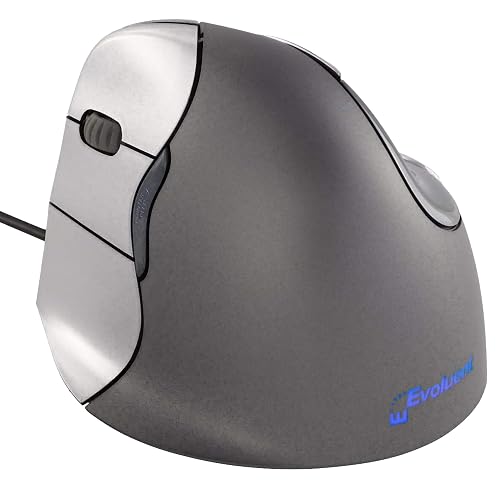
Evoluent VerticalMouse Left Hand
A wired vertical mouse in a left-hand version, model VM4L.
Related reading
For specific product recommendations, see our roundup of the best left-handed gaming mice. For broader workspace ergonomics, our guide to left-handed desk setup covers monitor placement, keyboard layout, and accessory positioning. And for the broader pattern of why this kind of decision exists in the first place, our piece on left-handed product design covers the structural problem.
Frequently asked questions
Can I just use a right-handed mouse?
Yes, and many lefties do, especially in office settings. The downside is wrist strain over long hours and side-button placement on the wrong side. If you're using a mouse for under two hours a day, it probably doesn't matter. If you're using one for eight, it adds up.
Why are left-handed mice so expensive?
Smaller market, lower production runs, no economies of scale. The same molding equipment that produces 100,000 right-handed mice produces maybe 5,000 left-handed ones — and the cost per unit reflects that. Manufacturers are also reluctant to expand the lefty lineup because returns are higher (more buyers ordering uncertain).
Are ambidextrous mice worse for lefties than true left-handed ones?
Not for most uses. Ambidextrous mice are designed to be neutral, which means they're optimized for neither hand specifically. For palm-grip users, the absence of left-handed contour is a real downside. For claw and fingertip grippers, it's invisible.
Will my side buttons work on an ambidextrous mouse?
Depends on the mouse. Truly ambidextrous mice have side buttons on both sides — your ring finger gets the same access your thumb would have on a right-handed model. "Symmetrical" mice (a marketing term) often only put side buttons on one side. Read the spec sheet, not the headline.
What's the best budget left-handed mouse?
For under $40, you'll do better with a quality ambidextrous mouse than a cheap "left-handed" one. The Logitech G203 LightSync, Glorious Model O, and Razer Viper Mini all run in this range and work well for lefties with the right software remap. True left-handed mice in this price range are mostly low-quality.