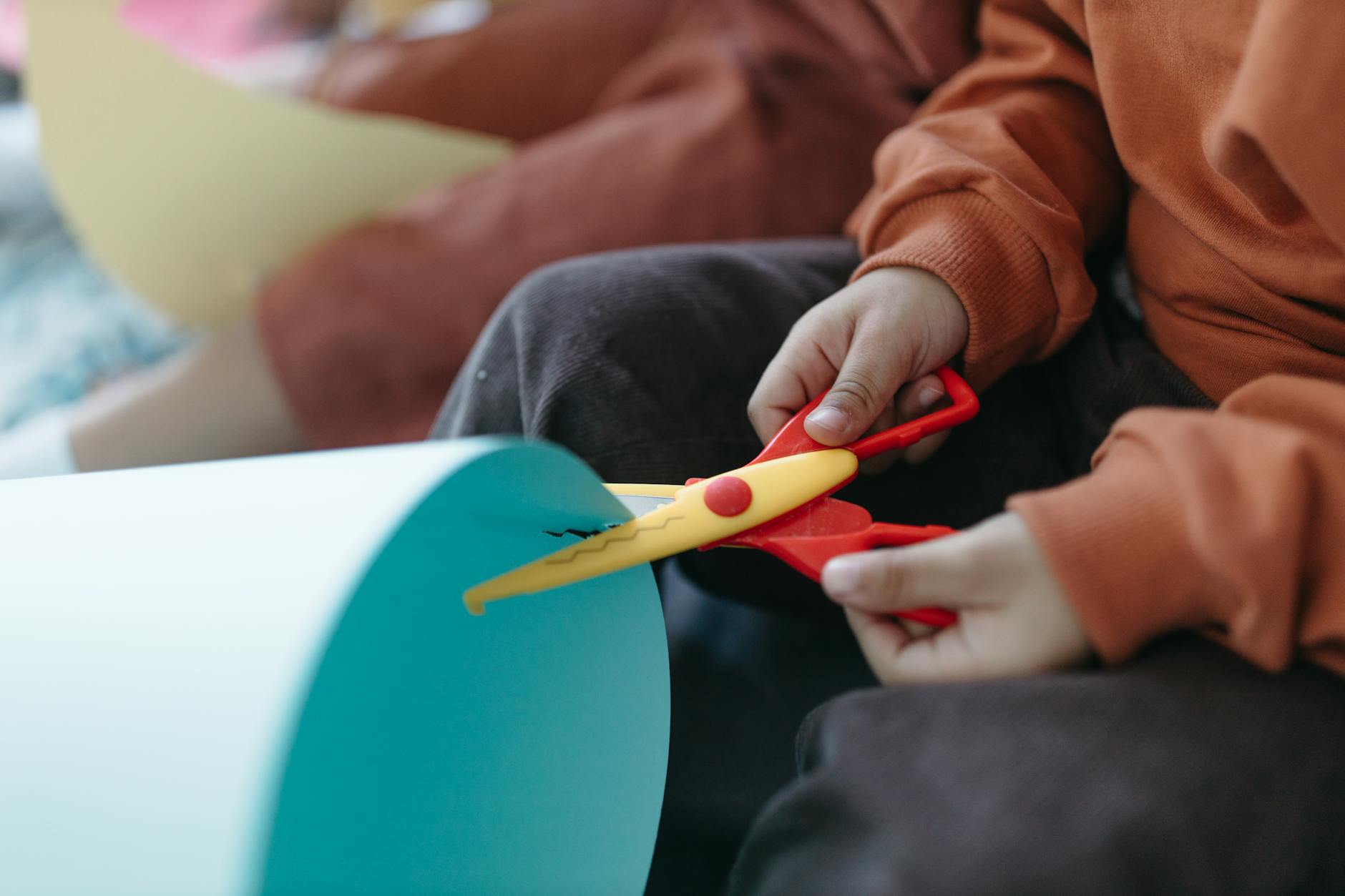
What are the best left-handed scissors for kids? Fiskars Left-Handed Kids Scissors (5-inch, blunt tip) are the classroom default for ages 4 to 8 — genuine reversed blades, safety tip, and durable enough to survive a school year of glue and construction paper.
For older kids and craft work, the Maped Koopy Spring-Assisted Lefty Scissors and Westcott KleenEarth Recycled Lefty Scissors are the next steps up. Below: picks by age band, plus how to spot the fake lefties that just have molded handles.
Why genuine lefty scissors matter for kids
Standard kid-scissors marketed as "ambidextrous" or "lefty-compatible" usually aren't. The handles are symmetrical (so they fit either hand), but the blades are still ground for right-handed cutting. A left-handed child gripping these has to push the blades together against the natural opening angle of their hand — which means the cut line is hidden from view, the paper folds and bends instead of slicing cleanly, and the kid concludes "I'm bad at scissors."
Genuine left-handed scissors flip two things:
- The blade orientation. The top blade in a lefty pair is on the opposite side, so the cutting line stays visible in the left hand.
- The handle shape. Asymmetric handles match a left-handed grip — the thumb hole is contoured for the left thumb, not flipped right-thumb.
You can test it in 10 seconds: hand the scissors to your kid and watch them cut a straight line on a piece of paper. If they're tilting their head or twisting the paper to see the cut, the scissors are working against them. If the cut just happens, the scissors are right.
For more on supporting left-handed kids broadly, see our piece on whether to correct a left-handed child (no, and here's why) and our parent guide to teaching a left-handed child to write.
Ages 4 to 6 (pre-K and kindergarten)
Blunt-tip safety scissors. Lighter spring tension. Smaller finger holes.
Fiskars Left-Handed Blunt-Tip Kids Scissors (5 inch)
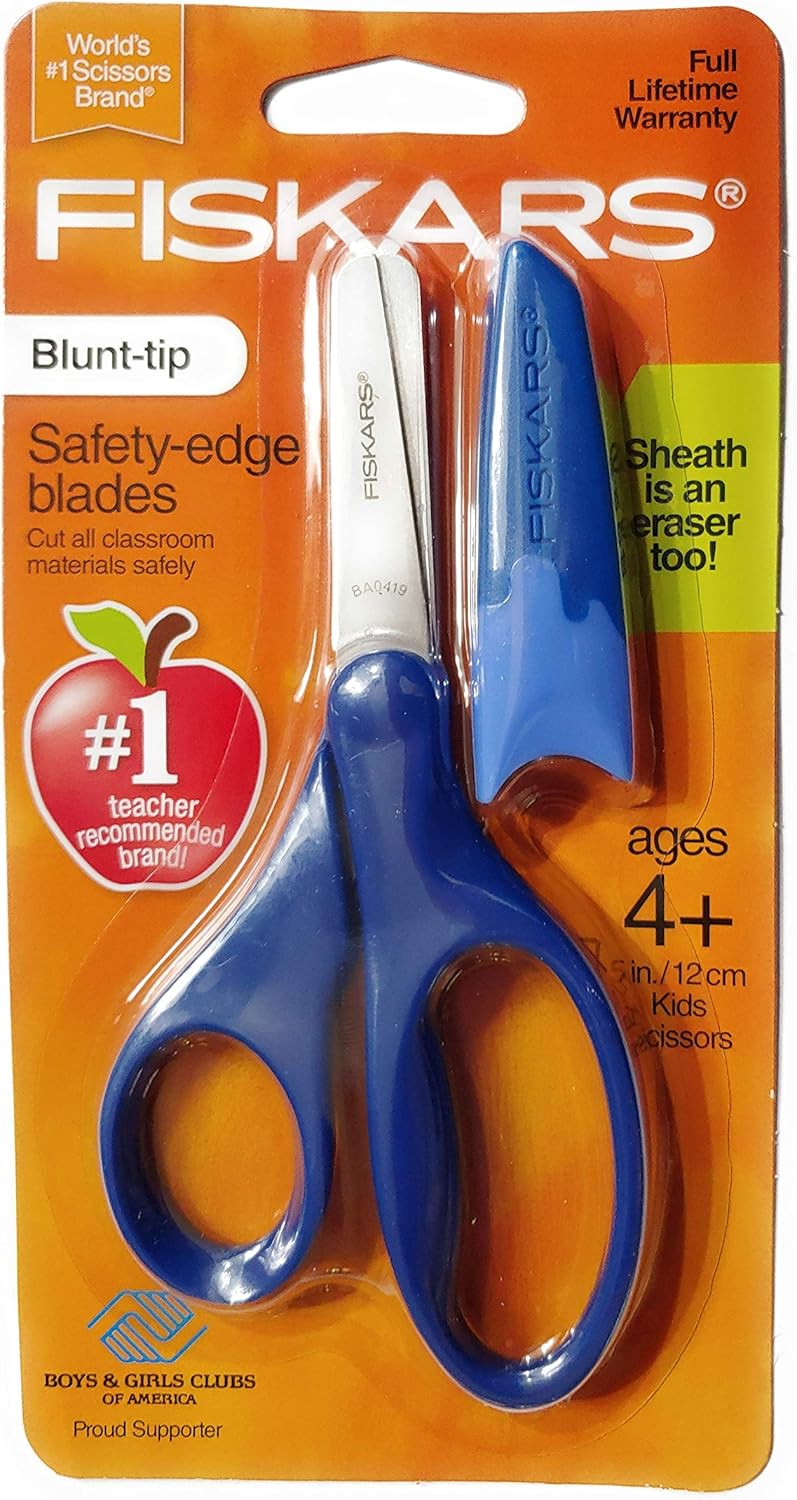
Fiskars Left-Handed Blunt-Tip Kids Scissors
The classroom standard. Genuinely reversed blades, blunt tip, lightweight, easy spring action. Survives daily classroom use for a full year. Buy two — one for school, one for home.
Maped Koopy Spring-Assisted Lefty Scissors
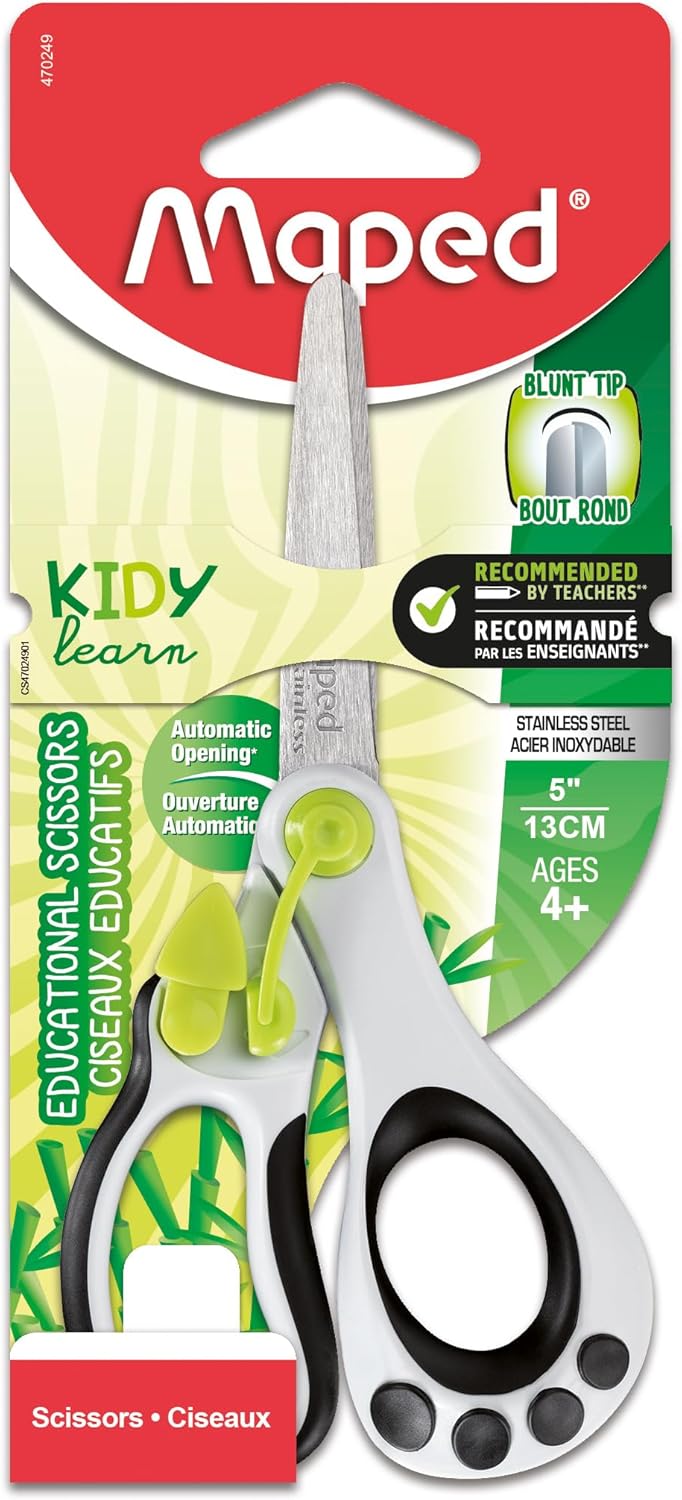
Maped Koopy Spring-Assisted Lefty Scissors
The spring-assist feature reopens the scissors automatically after each cut, which removes a major motor-control hurdle for early-stage cutters. Particularly good for kids physically struggling to reopen their hands or who fatigue quickly during cutting practice.
Ages 7 to 10 (elementary)
Pointed tips become useful for craft precision. Larger handles fit growing hands.
Fiskars Left-Handed Pointed-Tip Kids Scissors (5 inch)
Fiskars Left-Handed Pointed-Tip Kids Scissors
Same Fiskars build as the blunt-tip but with a sharper point for cleaner detail cuts. Use this when your kid has graduated past blunt-tip safety into actual craft work.
Westcott KleenEarth Lefty Scissors (7 inch)
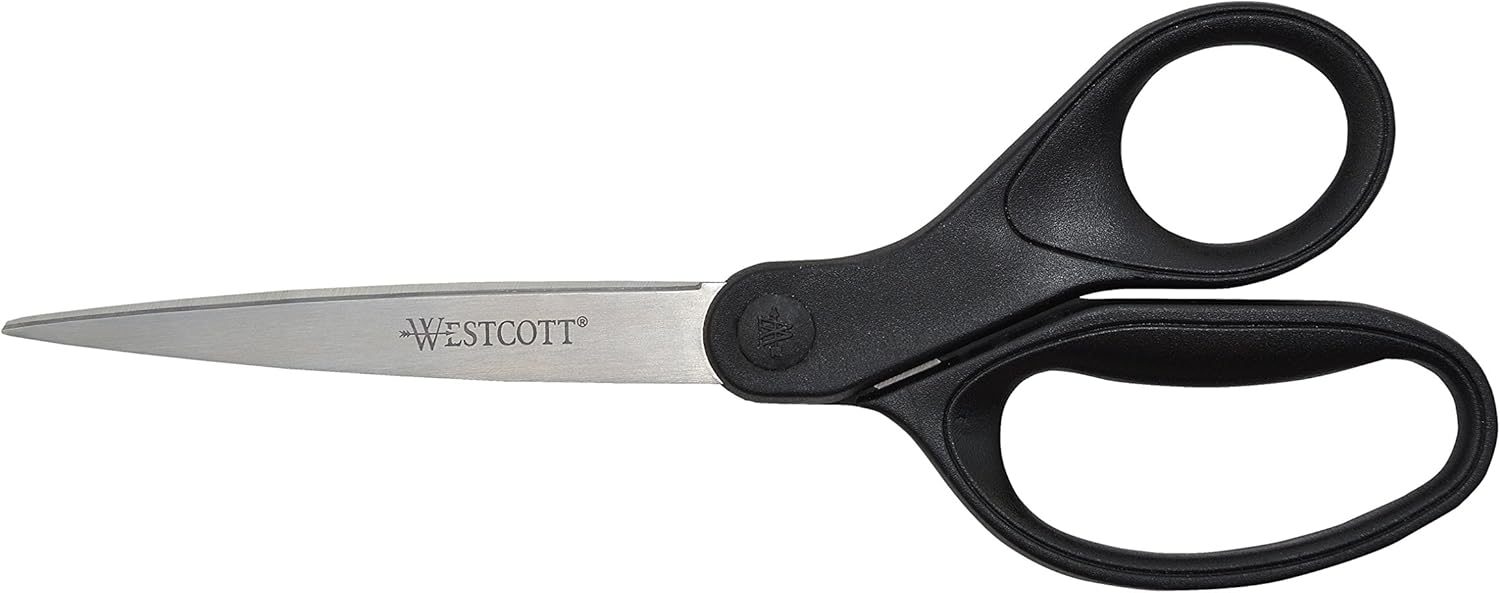
Westcott KleenEarth Lefty Scissors
Step up to a full-size lefty scissor as hand size grows. Westcott's KleenEarth line uses a recycled-plastic handle that's surprisingly durable, and the lefty version is a true reversed blade.
Ages 11 and up (tweens and into adult sizes)
By this age, the kid version is too small. They're cutting with full adult-size scissors but still benefit from a true lefty blade. Our broader guide to left-handed scissors covers the adult picks; below is the bridge option that works for both pre-teens and adults.
Fiskars Left-Handed 8-inch Bent Scissors
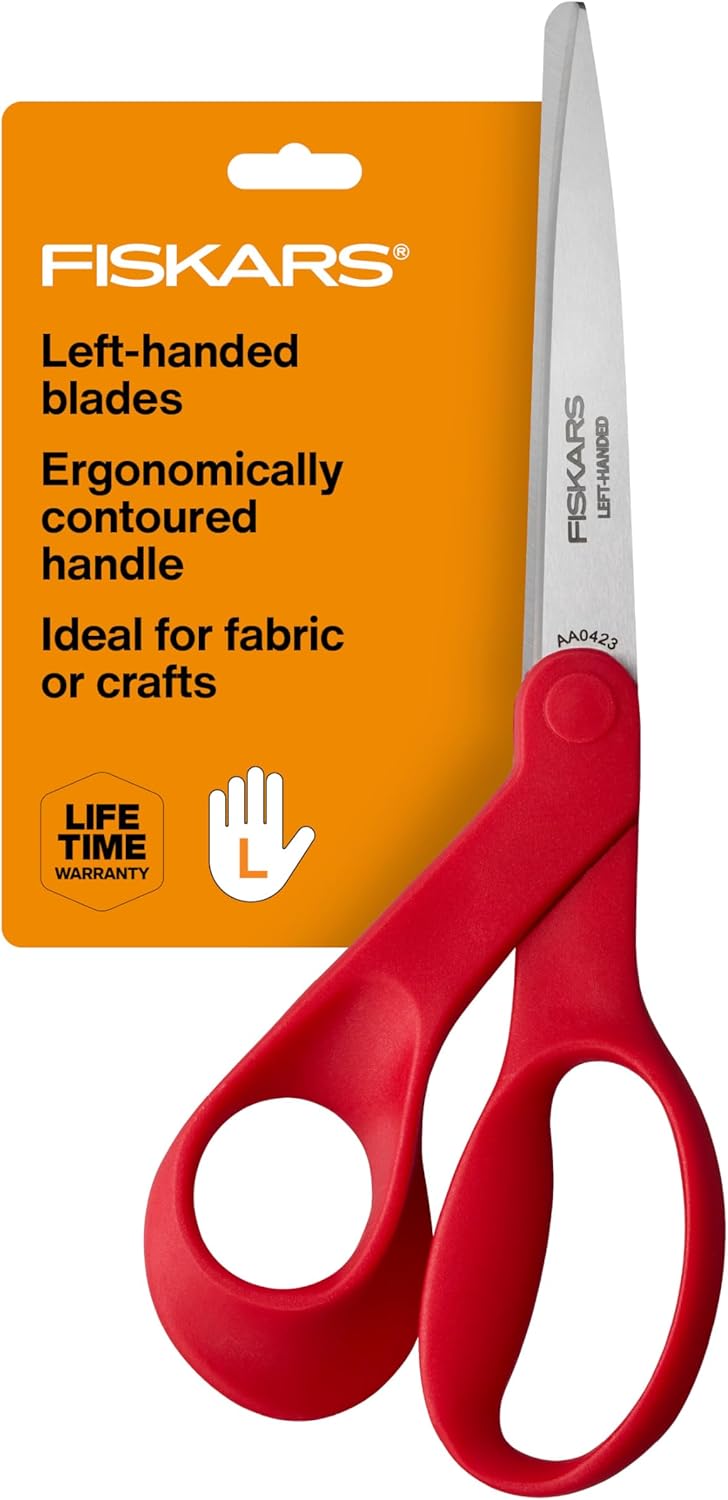
Fiskars Left-Handed 8-inch Bent Scissors
The grown-up version of the kids' Fiskars. 8-inch blade, bent handle for ergonomic cutting on a flat surface. The same scissors many lefty adults end up using permanently.
For craft and art projects
Detail cutting needs sharper, longer points. Worth a separate pair from the everyday classroom set.
Maped Expert Left-Handed Scissors
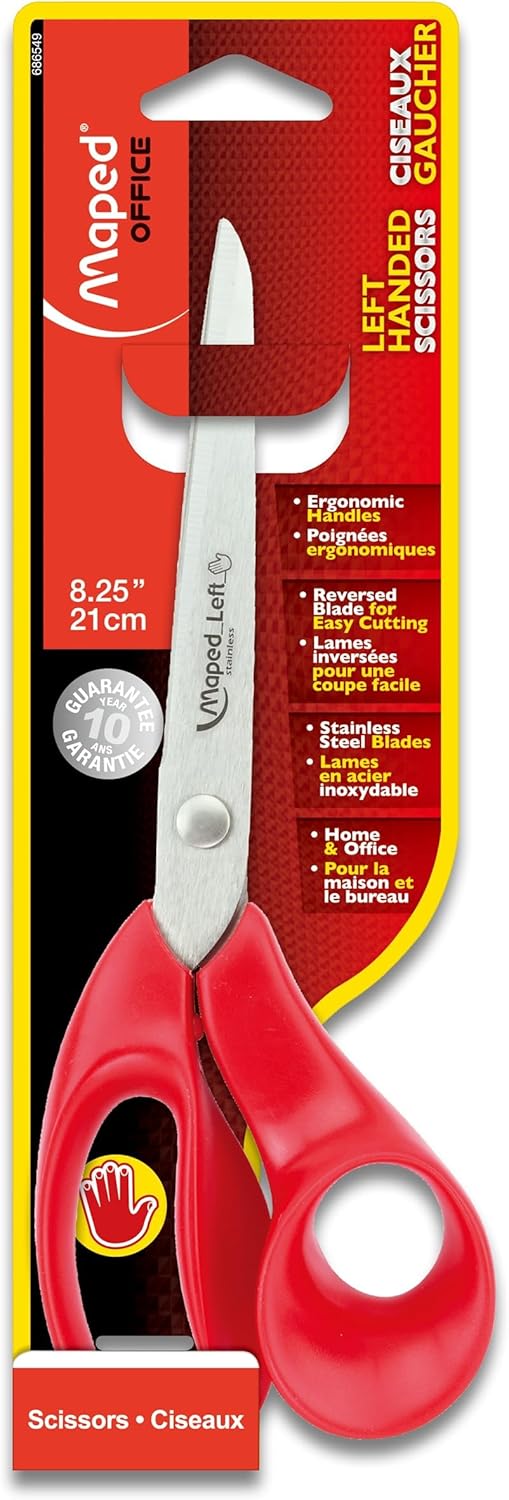
Maped Expert Left-Handed Scissors
French-made, stainless blades with a finer point than the Fiskars. Better for cutting along curved lines, intricate cuts, and anything where the cut needs to be precise.
What to avoid
Three traps to skip:
- "Ambidextrous" or "universal" kids' scissors. Almost always right-handed scissors with a symmetric handle. The blade orientation is the part that matters; symmetric handles don't fix it.
- Bulk school-supply scissors with no brand on the package. The blades are usually low-grade stamped steel that dull after a few weeks of paper-only cutting. Spend the extra few dollars on a known brand.
- Adult-sized "lefty" scissors marketed for kids. Adult scissors require more grip strength than a 6-year-old has. The cutting fails not because of handedness but because the spring is too stiff for small hands.
Setting up your lefty kid for cutting success
The scissors are half the battle. The other half is technique. Quick tips:
- Position the paper to the kid's left side, not centered. This lets them see the cut line as the scissors move.
- Lead with the elbow, not the wrist. Lefty cutters often twist the wrist to see the line; teaching them to move from the elbow keeps the wrist neutral.
- Mark cut lines clearly in marker, not pencil. The line needs to be visible from the side opposite the cutting hand.
- For straight lines, rotate the paper, not the scissors. The scissors stay perpendicular to the body; the paper feeds through.
Related reading
For adult-size lefty scissors, see our roundup of the best left-handed scissors. For the broader argument about supporting (not correcting) left-handed kids, our piece on whether to correct a left-handed child covers the research. And for kid-friendly lefty handwriting setup, see teaching a left-handed child to write.
Frequently asked questions
What age should a left-handed child start with lefty scissors?
As soon as they start using scissors at all — typically age 3 or 4 in pre-K. There's no benefit to delaying. Starting with right-handed scissors and switching later means re-learning the motion from scratch, which is harder than starting correctly the first time.
Are "ambidextrous" kids' scissors fine for left-handed kids?
Almost always no. The marketing label means the handle works for either hand, but the blades are usually right-handed. Watch your kid use them for a minute — if they're tilting their head, twisting paper, or mashing the cut, the blades aren't matching the hand.
Do schools provide left-handed scissors?
Some do; many don't. Most U.S. classrooms have one or two pairs of lefty scissors stocked at the teacher's discretion, but the supply is usually inadequate for the number of left-handed students in a class (roughly 1 in 10). Send your child to school with their own labeled pair.
How do I tell if scissors are genuinely left-handed?
Hold them as a left-hander would (thumb in the bottom hole, fingers in the top). Look at the blades from the side: the top blade should be on the right side of your view (so the cut line is visible from the left). If it's on the left side, blocking your view, the scissors are right-handed.
Can left-handed kids learn to use right-handed scissors?
They can adapt — kids are flexible — but they shouldn't have to. Right-handed scissors in a left hand teach awkward compensation patterns (head-tilting, paper-twisting, weaker grip strength) that compound over years of school cutting. The cost of buying real lefty scissors is $7 to $13. The cost of letting them suffer through right-handed scissors for a decade is harder to quantify but real.