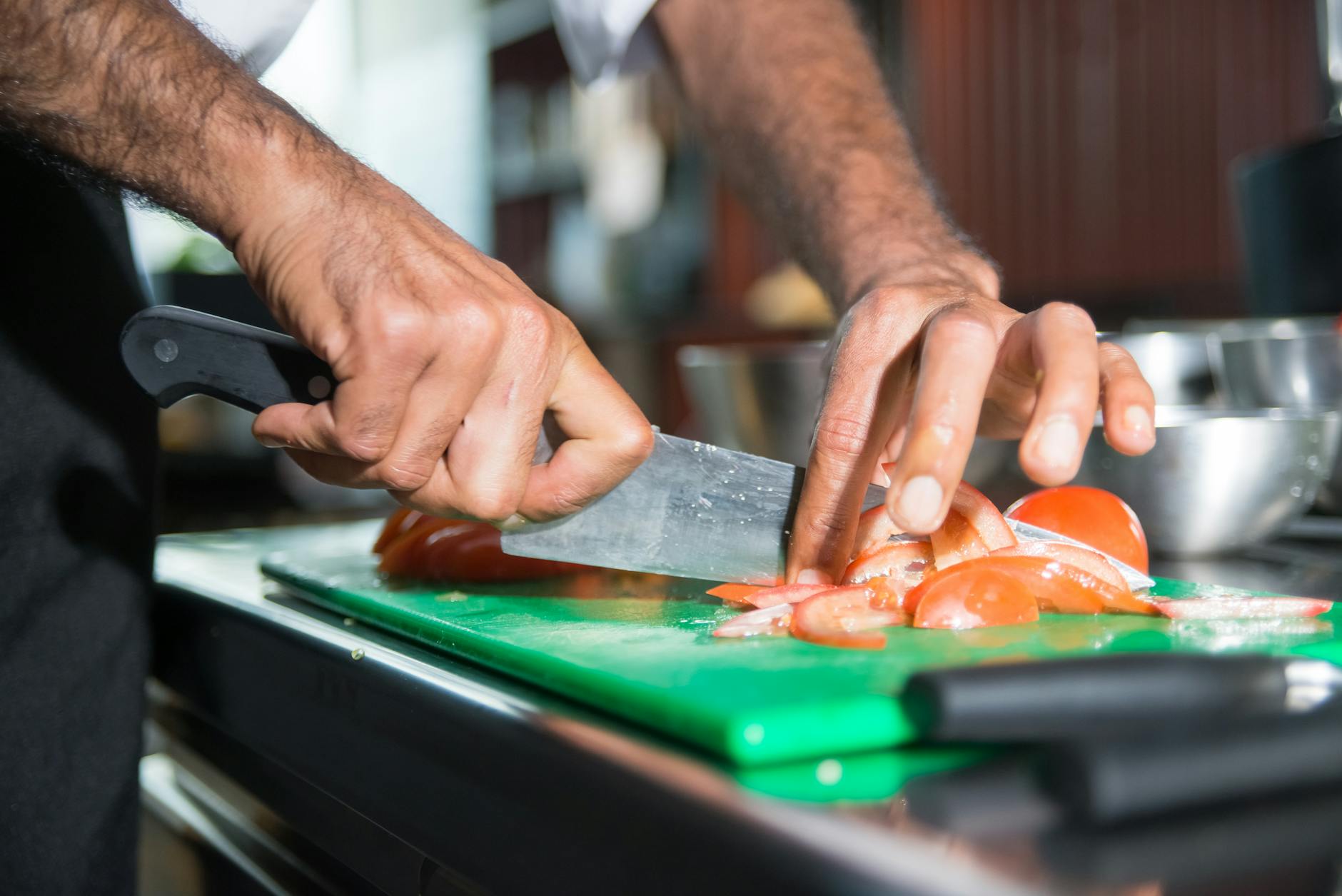
What's the best left-handed kitchen knife? For most home cooks, the Wüsthof Classic Ikon Left-Handed 8-inch chef's knife. It carries a true left-handed asymmetric grind, balances well in the hand, and doesn't pull sideways through onions the way a flipped right-handed knife does.
If you cook with Japanese-style single-bevel knives, the lefty versions from Shun and Yaxell are the upgrade pick. Below: the picks across chef's, paring, and bread knives, with a quick note on what's worth your money and what isn't.
Why left-handed knives are a real thing
Most kitchen knives are asymmetric. The cutting edge isn't ground to a perfect symmetric V — it's ground more aggressively on one side than the other. Western knives typically use a 70/30 grind (favoring the right hand); Japanese single-bevel knives are extreme, with all the grind on one side and a flat back.
A right-handed asymmetric knife in a lefty's hand pulls the blade away from the cutting line. You compensate with extra wrist tension, and your slices come out wedged or angled. The fix isn't a different grip — it's a knife with the grind reversed.
Lefty kitchen knives mirror the asymmetric geometry. Same steel, same shape, opposite bevel. For Western 70/30 knives, the difference is noticeable but not life-changing. For Japanese single-bevels (yanagiba, deba, usuba), it's the difference between using the knife correctly and fighting it the entire prep session.
For more on the broader lefty-cooking picture, see our guide to cooking left-handed and our list of famous left-handed chefs.
Chef's knife: the most important buy
The chef's knife is the workhorse — 80% of your kitchen cutting goes through it. If you upgrade one knife, upgrade this one.
Wüsthof Classic Ikon Left-Handed 8-inch

Wüsthof Classic Ikon Left-Handed Chef's Knife
The default recommendation. German X50CrMoV15 stainless, full tang, double-bolster, balanced for rocking-cut technique. The lefty version flips the asymmetric grind so the blade tracks straight through soft vegetables and proteins.
Mac Professional Left-Handed Chef's Knife (8 inch)
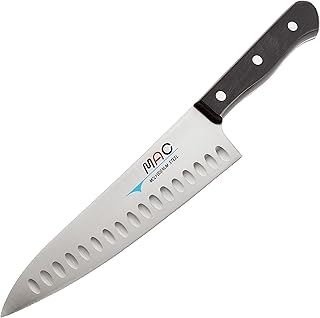
Mac Professional Left-Handed Chef's Knife
Lighter, thinner blade than the Wüsthof. Mac's professional series uses molybdenum steel that holds an edge longer than typical German blades, and the lefty version has the bevel ground correctly for left-handed use. Better for cooks who do a lot of fine slicing rather than heavy chopping.
Global G-2L Left-Handed 8-inch
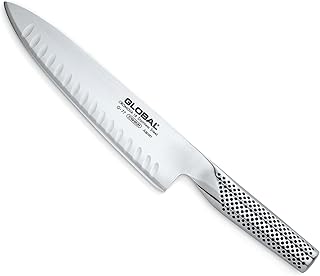
Global G-2L Left-Handed Chef's Knife
If you like a thinner profile and one-piece stainless construction, the Global G-2L is the iconic Japanese-style Western chef's knife in lefty form. Lighter than either the Wüsthof or the Mac. The dimpled handle is polarizing — some lefties love the grip, some find it slippery when wet.
Paring knife: the quiet essential
Paring knives matter for fine work — peeling, deveining, hulling strawberries, trimming fat. The asymmetric-grind issue matters less here because you're using the tip, not the belly of the blade. But a lefty paring knife still feels noticeably more natural in the hand.
Wüsthof Classic Ikon Left-Handed Paring Knife (3.5 inch)
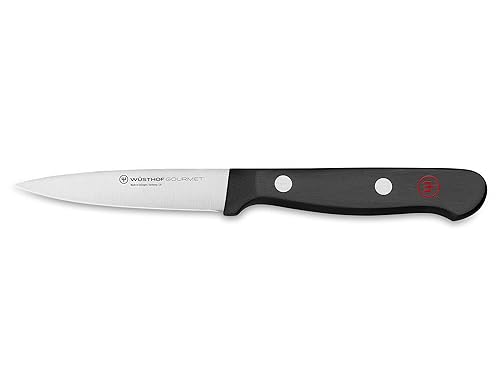
Wüsthof Classic Ikon Left-Handed Paring Knife
Pairs naturally with the Classic Ikon chef's knife above. Same steel, same construction logic. If you're building a Wüsthof set, this is the matching paring.
Mercer Culinary Genesis Left-Handed Paring Knife
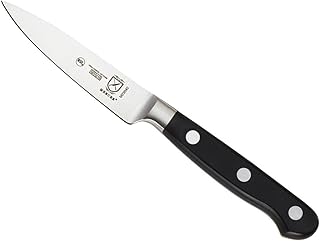
Mercer Culinary Genesis Left-Handed Paring Knife
The budget pick. German steel, full tang, NSF-certified. Mercer makes serviceable knives at culinary-school price points, and their lefty paring knife is one of the few sub-$50 lefty kitchen knives that isn't garbage.
Bread knife: where asymmetry matters most
Surprisingly, bread knives are where lefty buyers see the biggest difference. The serrations on a right-handed bread knife are angled to bite when pulling toward the right shoulder. A lefty pulling the same knife toward their left shoulder gets the back of each tooth instead of the cutting edge — which is why slicing bread feels "draggy" or you end up sawing instead of slicing.
Wüsthof Classic Ikon Left-Handed Bread Knife (9 inch)
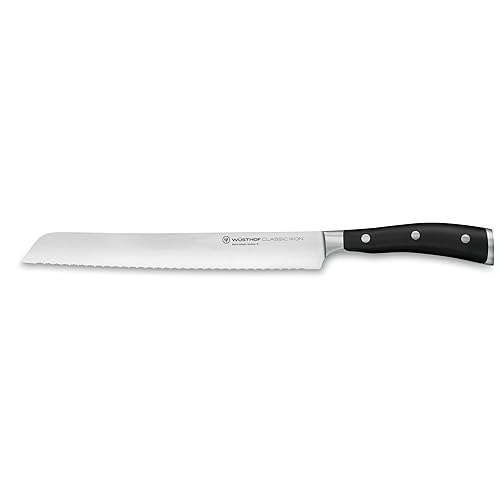
Wüsthof Classic Ikon Left-Handed Bread Knife
The serrations point the correct direction for left-handed sawing. Once you've used a properly oriented bread knife, the difference is impossible to un-feel.
Japanese single-bevel knives (for the committed)
Single-bevel Japanese knives — yanagiba for sushi, deba for fish butchery, usuba for vegetables — are the place where lefty geometry matters most. A right-handed yanagiba in a left hand cuts at the wrong angle through every slice. The skill ceiling is high, and the wrong-handed knife caps it permanently.
Yaxell Super Gou Left-Handed Yanagiba
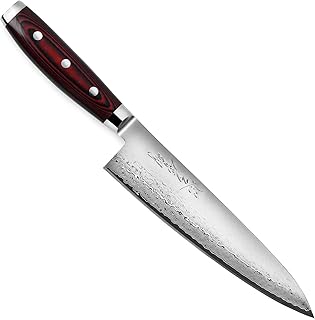
Yaxell Super Gou Left-Handed Yanagiba
If you cut sashimi or sushi at home, this is the upgrade. 161-layer Damascus, Japanese single-bevel ground for the left hand. Not a beginner purchase, but unbeatable in its niche.
Shun Classic Western Left-Handed Chef's Knife

Shun Classic Western Left-Handed Chef's Knife
Bridge between Japanese geometry and Western shape. The asymmetric VG-MAX grind is reversed for lefty use. Lighter feel than European knives, with a sharper out-of-box edge.
What to skip
Three buying mistakes worth avoiding:
- "Lefty" knives that are just rebranded right-handed blades. Some Amazon listings stamp "left-handed" on a standard knife and charge a premium. Check that the listing specifically describes an asymmetric grind reversed for left-hand use. If it just says "ergonomic handle," that's a handle change only — not a real lefty knife.
- Cheap "ambidextrous" knife sets. Most knife sets are symmetric to keep manufacturing simple. Symmetric knives work for lefties, but they cut less aggressively than a true asymmetric in either hand. Fine for a starter set; not the upgrade pick.
- Buying a full lefty set on day one. Start with the chef's knife. If you notice the difference (you will), add the paring and bread knife next. The yanagiba comes only if you actually do the work that needs it.
Related reading
For broader kitchen ergonomics, see our piece on cooking left-handed. For non-knife kitchen tools, our roundups of left-handed spatulas and left-handed can openers cover the rest of the daily-use items. And if you're shopping for a lefty cook in your life, our guide to gifts for left-handed people has more ideas.
Frequently asked questions
Do left-handed people really need different kitchen knives?
For asymmetric Western knives (most German and many Japanese-Western hybrids), the difference is noticeable but not essential — you can cook with a right-handed knife as a lefty and most people do. For Japanese single-bevel knives, a properly handed knife is essential; the geometry doesn't work otherwise. Bread knives are the surprise winner: the serration angle matters more than people expect.
Can I just sharpen a right-handed knife to be left-handed?
For asymmetric knives, sometimes — a skilled sharpener can re-grind a 70/30 Western knife to 30/70. Cost is similar to buying a new lefty knife, and not every sharpener does it. For Japanese single-bevels, no — the entire blade geometry is built around the bevel direction.
What's the cheapest decent left-handed chef's knife?
The Mercer Culinary Genesis lefty chef's knife runs about $50 and is the floor for "actually-good." Below that price point, you're buying a flipped right-handed knife with marketing copy.
Are left-handed knife sets worth it?
Usually no. Buy individual knives for the cuts you actually make. Most knife sets pad with knives nobody uses (steak knives you already own, utility knives that overlap with paring). A three-knife lefty set — chef's, paring, bread — covers 95% of home cooking.
Do famous chefs use left-handed knives?
The lefty pros mostly do. Gordon Ramsay (left-handed) uses Wüsthof. Bobby Flay (left-handed) has used Mac and Shun. The Japanese-trained lefty chefs almost universally use lefty single-bevels — the technique requires it. See our piece on famous left-handed chefs for the broader list.