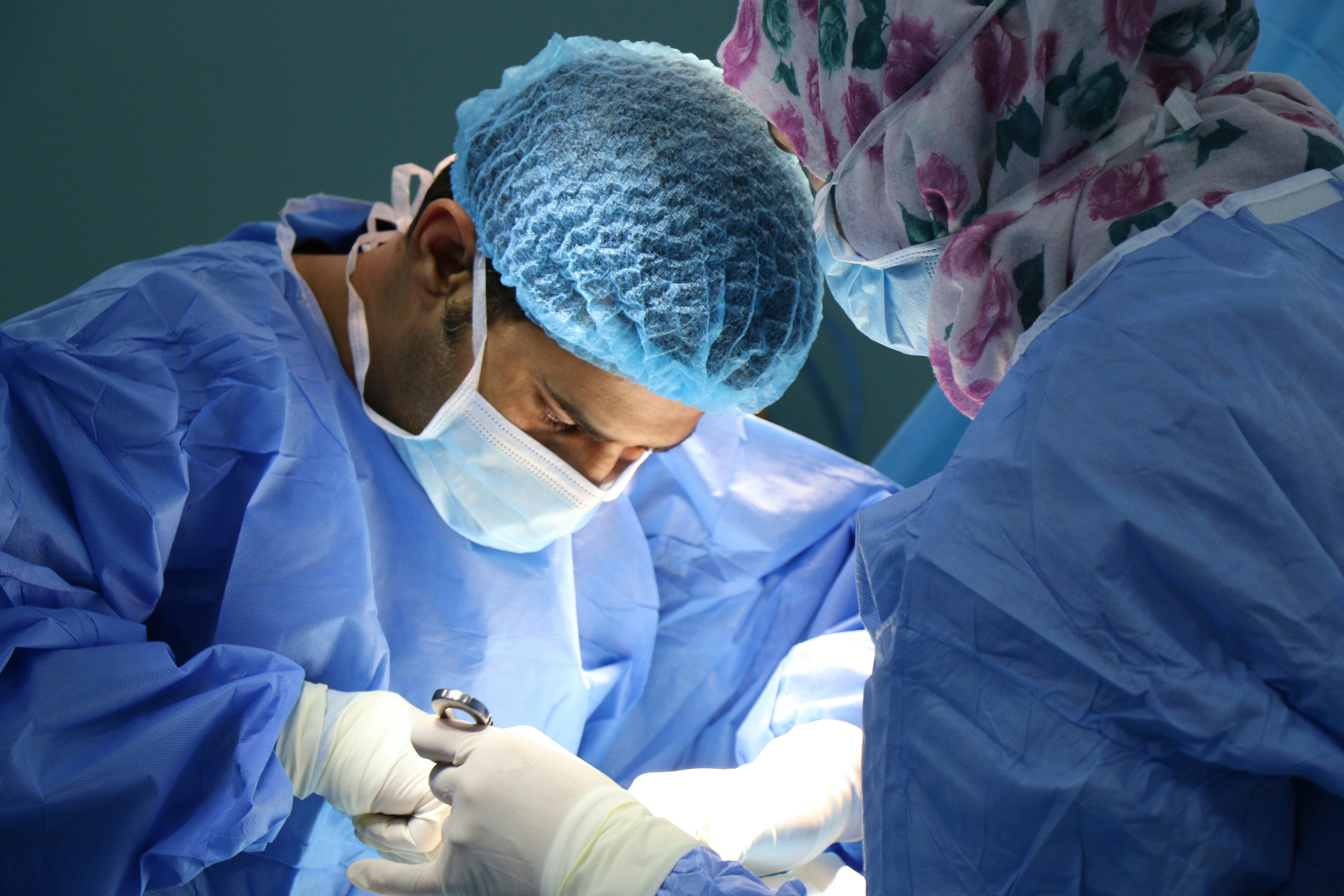
Can left-handed people be surgeons? Absolutely. Roughly 10% of surgeons are left-handed, matching the general population rate. They train with modified techniques and instrument positioning to operate safely and effectively.
Despite operating rooms designed for right-handed use, left-handed surgeons have excelled across every surgical specialty. Here is how they adapt - and where their handedness can actually be an advantage.
The right-handed operating room
Nearly every element of a modern operating room is designed with right-handed surgeons in mind. The operating table positions the patient for right-handed access. Instruments are laid out on the surgeon's right side. Laparoscopic equipment, suture cutters, and even the ergonomic grips on surgical tools assume a right-handed user.
This creates a constant adaptation challenge for left-handed surgeons. From their first day of surgical training, lefties must learn to navigate an environment built for the other 90%. Many describe it as similar to the everyday experience of left-handed product design challenges - but with far higher stakes.
How left-handed surgeons adapt
Most left-handed surgeons develop one of three strategies:
- Mirroring. They learn to perform procedures as a mirror image of right-handed technique, standing on the opposite side of the table when possible. This requires reinterpreting anatomy from a reversed perspective.
- Ambidextrous training. Some lefties deliberately train their right hand for specific tasks, developing functional ambidexterity. This approach is common in surgical residencies where attending surgeons teach exclusively right-handed technique.
- Left-handed instruments. A growing number of surgical instrument manufacturers now offer left-handed variants of scissors, needle holders, and other tools. These instruments have reversed blade orientation and ergonomic grips shaped for the left hand.
Research published in the Journal of Surgical Education has found that left-handed surgical trainees initially score lower on technical assessments conducted with standard right-handed instruments but reach equivalent proficiency with practice or when provided with left-handed tools.
Where left-handedness is an advantage
Left-handed surgeons may have genuine advantages in certain situations. When operating on the right side of a patient's body - for example, during a right-sided kidney procedure or appendectomy - a left-handed surgeon can achieve angles and access that are awkward for right-handed colleagues.
Studies on handedness and the left-handed brain suggest that left-handers may have enhanced spatial reasoning abilities. In surgery, strong spatial awareness translates directly into better three-dimensional understanding of anatomy, which is critical during complex procedures.
Left-handed surgeons also tend to develop stronger bilateral coordination from years of adapting to right-handed tools. This functional ambidexterity can be a significant asset in procedures requiring fine motor control with both hands simultaneously.
Challenges in surgical training
The biggest hurdle for left-handed surgeons is often training, not practice. Surgical residency programs historically did not accommodate left-handedness. Attending surgeons would teach techniques designed for the right hand, and left-handed residents were expected to adapt on the fly.
This is changing. A 2020 survey of surgical residency directors found that most programs now acknowledge left-handedness as a factor in training and provide modified instruction. Some programs pair left-handed residents with left-handed attending surgeons when available. Simulation labs increasingly offer left-handed instrument sets for practice.
However, challenges remain. Laparoscopic and robotic surgery training modules are still largely designed around right-handed ergonomics. Left-handed trainees report spending additional hours in simulation labs to reach the same benchmarks as their right-handed peers - a phenomenon familiar to anyone who has read about left-handed discrimination in institutional settings.
Notable left-handed surgeons
Several prominent surgeons have been left-handed:
- Dr. Victor Chang - The pioneering Australian cardiac surgeon who developed artificial heart valve techniques was left-handed. He is credited with transforming heart transplant surgery in the Southern Hemisphere.
- Dr. Denton Cooley - One of the most famous heart surgeons in history, Cooley performed the first successful human heart transplant in the United States and was known to be left-handed.
- Dr. Atul Gawande - The surgeon, writer, and public health researcher is left-handed and has written about the challenges of surgical training, including the adjustments required for left-handed practitioners.
Their success demonstrates that handedness is not a barrier to surgical excellence. Like left-handed architects and other professionals in spatially demanding fields, left-handed surgeons bring a different perspective that can enhance their work.
The future of inclusive surgical design
The surgical world is slowly becoming more accommodating of left-handedness. Instrument manufacturers are expanding their left-handed product lines. Surgical training programs are incorporating handedness awareness into their curricula. Research into ergonomic operating room design increasingly considers left-handed users.
Perhaps most significantly, robotic surgery platforms like the da Vinci system can be configured for left-handed use, potentially eliminating many of the ergonomic barriers that have traditionally challenged left-handed surgeons. As robotic surgery becomes more prevalent, the handedness of the surgeon may matter less than ever before.
Frequently asked questions
What percentage of surgeons are left-handed?
Approximately 10% of surgeons are left-handed, which mirrors the rate of left-handedness in the general population. Some surgical specialties may have slightly different rates, but there is no evidence that left-handed individuals are discouraged from pursuing surgery at higher rates than they were in the past.
Do left-handed surgeons have worse outcomes?
No. Multiple studies have found no difference in patient outcomes based on surgeon handedness. While left-handed surgeons may use different techniques or positioning, their results are equivalent to those of right-handed surgeons. Skill, training, and experience matter far more than which hand is dominant.
Are there left-handed surgical instruments?
Yes. Many surgical instrument manufacturers now produce left-handed versions of common tools, including scissors, needle holders, and retractors. These instruments have reversed blade orientation and modified ergonomic grips. However, availability varies by institution, and not all operating rooms stock left-handed instruments as standard.
Should left-handed medical students avoid surgery?
Absolutely not. Left-handedness is not a barrier to a successful surgical career. While left-handed trainees may face some additional adaptation challenges early in training, these are manageable with practice and increasingly accommodated by modern training programs. Many left-handed surgeons report that their adaptation process ultimately made them more versatile and skilled.