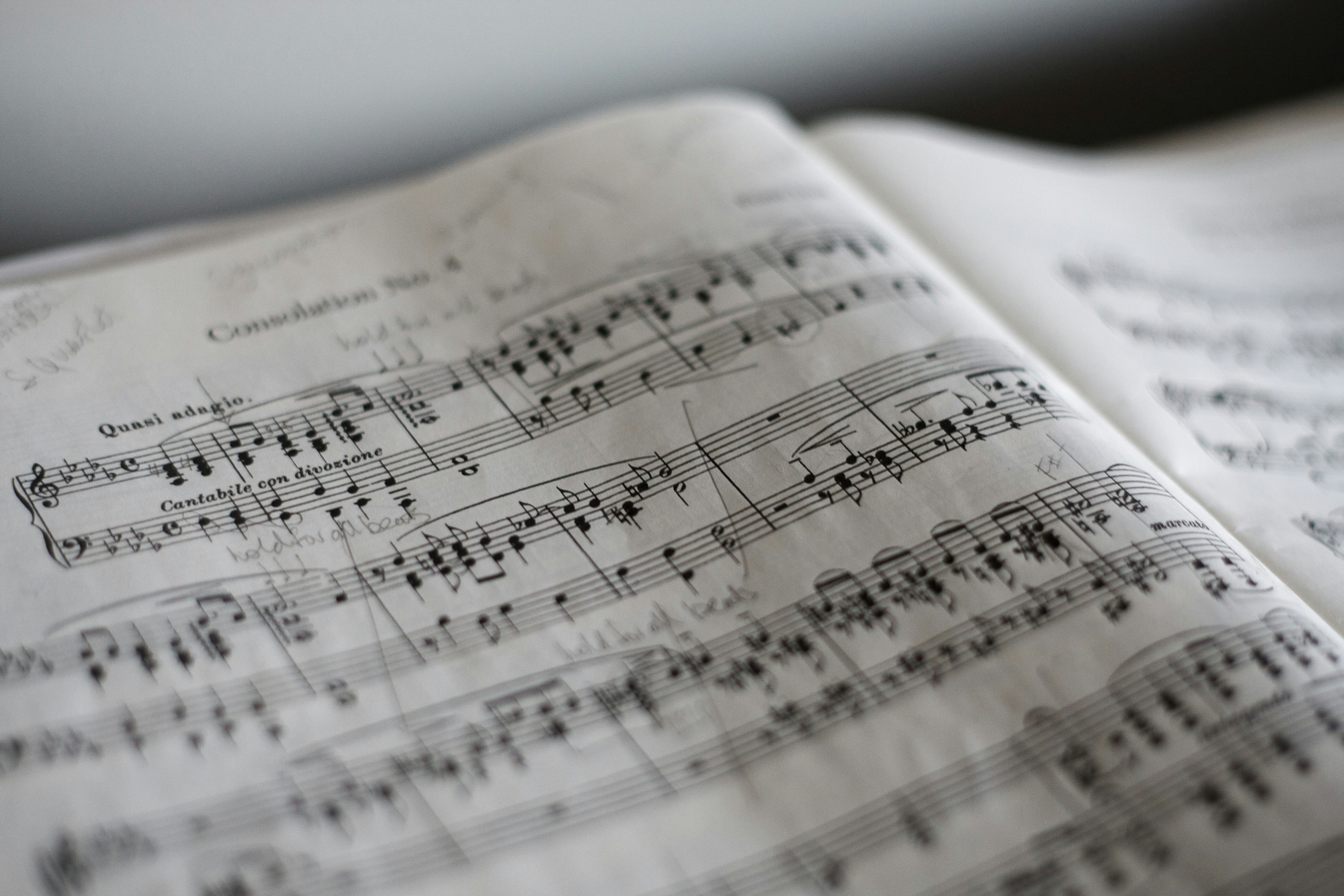
Is piano harder for left-handed people? No - left-handed pianists may actually have an advantage. The left hand handles complex bass lines, chords, and countermelodies that right-handers often struggle with, giving lefties a natural head start on two-handed coordination.
Unlike many instruments that must be physically reversed for left-handed players, the piano is played the same way regardless of handedness. Here is how to make the most of your left-handed advantage.
The left-handed piano advantage
In most piano music, the right hand plays the melody while the left hand handles accompaniment - bass lines, chords, arpeggios, and countermelodies. For right-handed pianists, the accompaniment hand is their weaker one, which can limit the sophistication and expression of the left-hand part.
Left-handed pianists have their dominant hand on the accompaniment side. This means they naturally bring more strength, dexterity, and control to the left-hand part. The result is often a richer, more fully realized sound with better balance between the two hands.
Research on the left-handed brain supports this. Left-handers tend to have a larger corpus callosum, the brain structure connecting the two hemispheres. This enhanced connectivity may contribute to better bimanual coordination - exactly what piano playing demands.
Famous left-handed pianists
Several legendary pianists were left-handed, and their playing often reflected their dominant hand's strength:
- Glenn Gould - The Canadian pianist renowned for his Bach interpretations was left-handed. His interpretations were noted for their remarkable clarity in the left-hand voices, bringing out contrapuntal lines that other pianists often buried.
- Sergei Rachmaninoff - The Russian composer and virtuoso was reportedly left-handed. His compositions are famous for their demanding left-hand parts, which he performed with extraordinary power and precision.
- Daniel Barenboim - The Argentine-Israeli pianist and conductor is left-handed. His playing is characterized by a warm, full-bodied tone with exceptional left-hand voicing.
- Bill Evans - The influential jazz pianist was left-handed. His revolutionary approach to jazz piano harmony featured rich left-hand voicings that changed how jazz musicians thought about the instrument.
Technique tips for left-handed pianists
Leverage your strong left hand
Instead of fighting your natural tendencies, lean into them. Your left hand already has superior strength and control, so use that foundation:
- Focus on voicing balance. With your dominant left hand, you can bring out bass lines and inner voices that add depth and richness to your playing.
- Explore left-hand repertoire. Pieces written specifically for the left hand - like Ravel's Piano Concerto for the Left Hand or Scriabin's Prelude and Nocturne for the Left Hand - let you showcase your dominant hand's capabilities.
- Practice left-hand independence. Your left hand is already strong; now develop its independence from the right hand through exercises that have each hand doing different rhythms and dynamics simultaneously.
Build up your right hand
The right hand plays the melody in most piano music, so it needs to be expressive and precise even though it is your non-dominant hand:
- Dedicated right-hand exercises. Spend extra practice time on right-hand-only exercises like Hanon, Czerny, or Schmitt studies to build strength and dexterity.
- Slow melody practice. Practice melodic passages with the right hand alone at a slow tempo, focusing on tone quality and phrasing before adding the left hand.
- Scale and arpeggio work. Right-hand scales and arpeggios build the finger independence and evenness that melody playing requires.
Two-handed coordination
Piano is ultimately a two-handed instrument, and your goal is balanced coordination:
- Practice hands separately first. This is standard piano pedagogy, but it is especially important for left-handers who need to ensure the right hand's part is secure before combining.
- Listen for balance. Left-handers sometimes overpower the left-hand part simply because that hand is stronger. Train your ear to listen for proper balance between melody and accompaniment.
- Record yourself. Recording and listening back reveals balance issues that are hard to hear in the moment.
Do you need a reversed piano?
Reversed pianos - with the high notes on the left and low notes on the right - do exist, but they are extremely rare and not recommended for most left-handed pianists. Here is why:
- All piano music is written for standard layout. Using a reversed piano would require transposing every piece of music, making it impossible to use standard sheet music.
- You cannot play other pianos. A pianist trained on a reversed keyboard cannot sit down at a standard piano in a concert hall, church, school, or friend's house.
- The standard layout already favors lefties. As discussed above, the left hand's role in piano music is where strength and dexterity matter most. The standard layout is arguably already the "left-handed" configuration.
This is unlike left-handed guitars or the left-handed ukulele, where reversing the instrument is common and practical. The piano's symmetrical playing position and the nature of its repertoire make reversal unnecessary.
Choosing a teacher
When looking for a piano teacher as a left-handed student, keep these points in mind:
- Most teachers can work with lefties. Unlike some musical instruments where handedness is a major teaching consideration, piano technique is largely the same regardless of hand dominance.
- Ask about hand balance. A good teacher will help you manage the dynamic balance between your stronger left hand and developing right hand.
- Avoid teachers who see it as a problem. Left-handedness is not a limitation in piano. Any teacher who treats it as one is not the right fit.
Frequently asked questions
Are left-handed people better at piano?
Left-handed people are not inherently better or worse at piano. However, they may have a natural advantage in left-hand technique, which handles complex accompaniment patterns in most piano music. They may need to invest more practice time developing right-hand melody playing. Overall, the differences are small and easily overcome with practice.
Should a left-handed person play a reversed piano?
No. Reversed pianos are impractical because all piano music is written for standard keyboard layout, and a pianist trained on a reversed keyboard cannot play any other piano. The standard piano layout already gives the left hand a substantial musical role, making reversal unnecessary.
Which hand is more important in piano?
Both hands are equally important, but they serve different roles. The right hand typically plays the melody, while the left hand handles bass lines, chords, and accompaniment. Advanced piano music demands high-level technique from both hands. The idea that either hand is more important oversimplifies the complex coordination that piano playing requires.
Did any famous composers write music for the left hand?
Yes. The most famous left-hand piano work is Ravel's Piano Concerto for the Left Hand, commissioned by pianist Paul Wittgenstein, who lost his right arm in World War I. Other composers who wrote for the left hand include Brahms, Saint-Saëns, Scriabin, Prokofiev, and Britten. These works demonstrate that a single hand can produce remarkably complete and expressive piano music.