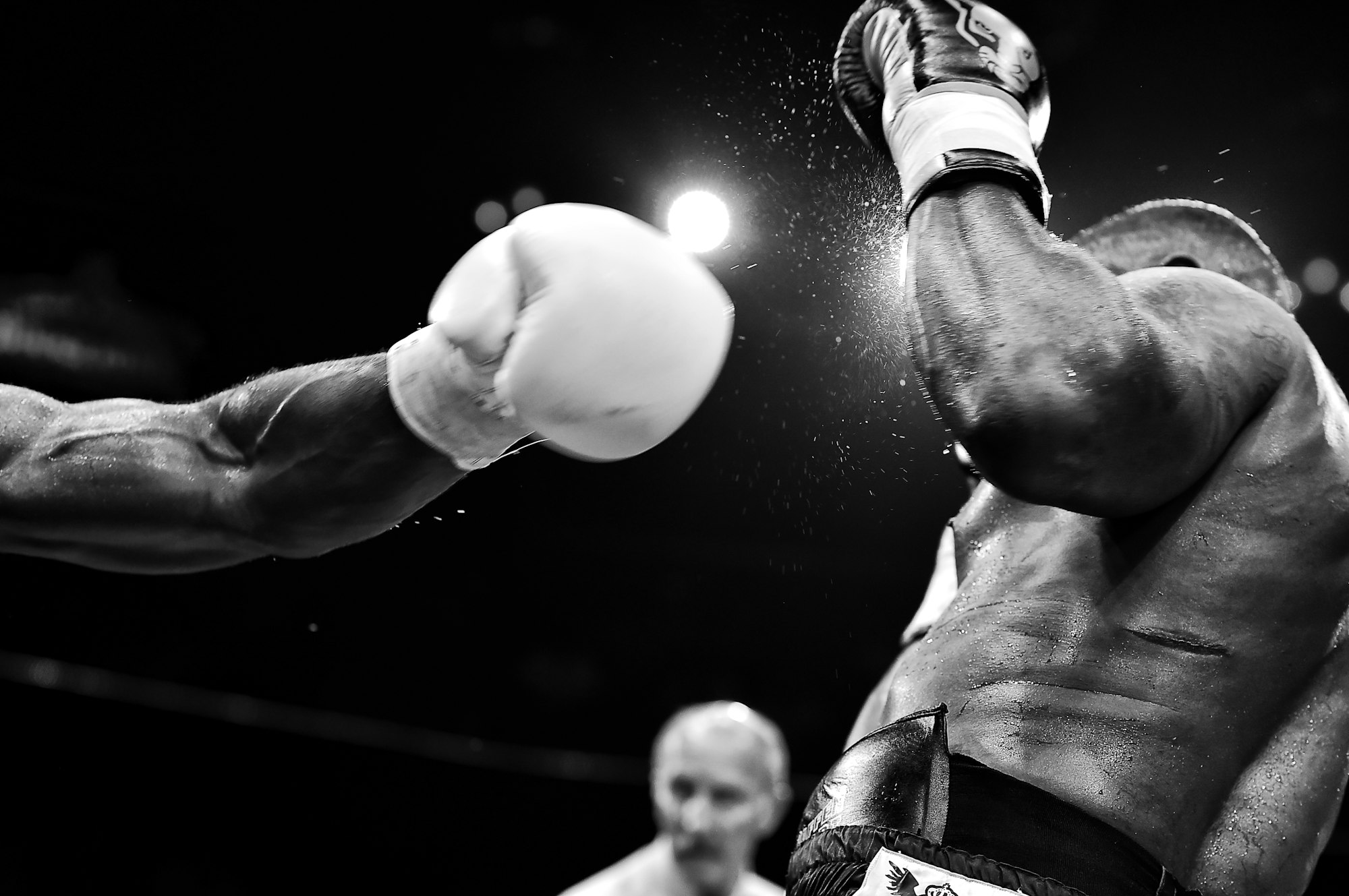
Who are the best left-handed MMA fighters? Conor McGregor, B.J. Penn, Lyoto Machida, Holly Holm, and Cody Garbrandt rank among the best left-handed MMA fighters who used the southpaw advantage to win UFC titles.
Left-handers make up about 10% of the population but appear at much higher rates in elite combat sports — a pattern that mirrors what we see in left-handed boxing, left-handed fencing, and other one-on-one combat disciplines. In the UFC and across mixed martial arts, southpaws have produced an outsized share of champions, and there's a real strategic reason why.
Why southpaws have an advantage in MMA
Most fighters train against right-handed (orthodox) opponents because most fighters are right-handed. When a right-hander faces a left-hander (a southpaw), the angles, lead foot, and power-hand positioning all reverse. Jabs come from the unfamiliar side. Power punches arrive on a different line. The lead leg of the orthodox fighter sits opposite the southpaw's lead leg, which scrambles the usual outside-foot-positioning game.
The result is a structural disadvantage for the right-handed fighter, who has fewer reps against southpaws. For the lefty, every fight is more or less a "normal" fight — they've been training against right-handers their entire careers. This is the same dynamic that makes southpaw boxers and fencers over-represented at the elite level, and it's why coaches widely treat southpaw matchups as a tactical problem requiring dedicated camp preparation. (See our explainer on what "southpaw" means for the term's origins.)
Conor McGregor
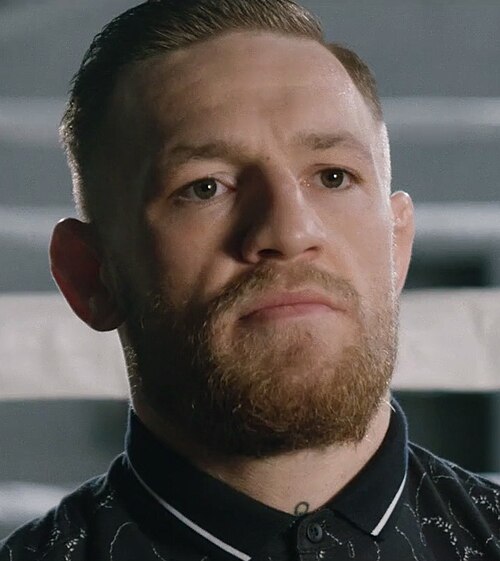
McGregor is the most famous left-handed fighter in MMA history and the most-watched draw the sport has ever produced. The Irish southpaw became the UFC's first simultaneous two-weight champion in 2016, holding the featherweight and lightweight titles at the same time. His left-handed straight — the punch that ended José Aldo's decade-long unbeaten run in 13 seconds at UFC 194 — is among the most-replayed moments in UFC history.
McGregor's left hand is the centerpiece of his striking game. His distance management, head movement, and reading of right-handed opponents' lead hands let him land that left straight on the centerline at the moment of an opponent's commitment. Whatever you make of his post-prime career, the eight-fight stretch from 2014 through 2016 — Brimage, Holloway, Poirier, Siver, Aldo, Diaz I and II, Alvarez — is one of the most dominant offensive runs from any southpaw in UFC history.
B.J. Penn
Penn, a left-handed Hawaiian who became a Brazilian Jiu-Jitsu world champion as a brown belt and then transitioned to MMA, is one of the most technically gifted fighters of the early UFC era. He held UFC titles at lightweight and welterweight, making him one of only a few fighters to win belts in two divisions, and his career predates McGregor's two-weight reign by nearly a decade.
Penn's left-handed striking was paired with elite-level grappling. He famously landed a left hook to floor Matt Hughes at UFC 46 — at the time considered one of the biggest upsets in MMA history — and his left jab was central to his lightweight title run against Joe Stevenson, Sean Sherk, Kenny Florian, and Diego Sanchez. He's now a UFC Hall of Famer and remains one of the most-cited southpaws among MMA technicians.
Lyoto Machida
The Brazilian-Japanese Shotokan karateka is left-handed and built one of the most distinctive striking styles in UFC history around his southpaw stance. Machida won the UFC light heavyweight title in 2009 with a second-round knockout of Rashad Evans and is widely credited with reintroducing traditional karate footwork to elite MMA.
His characteristic style — long-range, evasive, with sudden-line straight punches and jumping knees — depends heavily on the angles his southpaw stance creates. The straight left, often delivered while moving backward and pulling an opponent forward into the punch, became Machida's signature finishing tool. His knockouts of Randy Couture (jumping front kick), Vitor Belfort (head kick), and Mark Muñoz (kick to the temple) all built off the spatial mismatch his left-handed stance produced.
Holly Holm
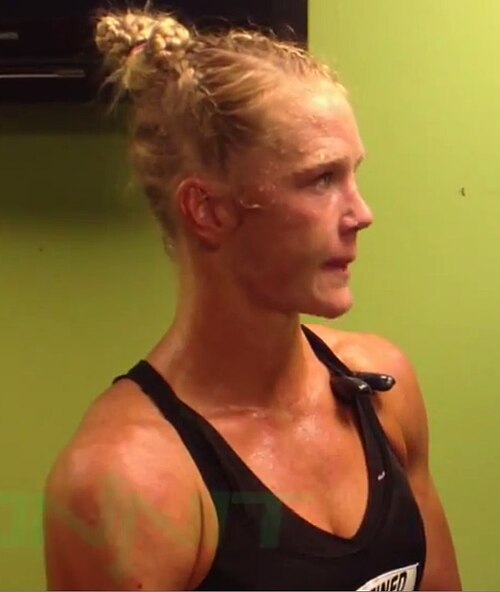
Holm, a left-handed former multi-division boxing world champion, transitioned to MMA in her thirties and built one of the most memorable upsets in UFC history. At UFC 193 in 2015, she dethroned Ronda Rousey — then considered unbeatable — by left head kick in the second round, ending Rousey's reign as bantamweight champion in front of 56,000 fans in Melbourne.
Her striking technique, refined over a 30-fight pro boxing career, leaned heavily on left-handed kicking and the long-range straight left. Holm's southpaw boxing background gave her exactly the kind of distance-management toolkit that historically gives MMA fighters trouble, and the head kick that finished Rousey was set up by a sequence of left jabs that conditioned Rousey's defensive line. Holm remains an active UFC bantamweight contender and is one of the most successful boxer-to-MMA crossovers in history.
Cody Garbrandt
Garbrandt, a left-handed former bantamweight champion, won the title at UFC 207 in 2016 with a five-round decision over Dominick Cruz — a victory that ended Cruz's two-and-a-half-year title reign. Garbrandt's combination of left-handed power, head movement, and amateur-boxing pedigree made him one of the most explosive offensive threats in the bantamweight division during his title run.
Garbrandt's left straight has finishing power, and his early UFC career produced a string of knockout victories that established him as one of the division's elite strikers. While his title reign was short, his Cruz fight is still cited as a textbook demonstration of how a southpaw can use angle changes and lead-hand probing to dismantle an unconventional orthodox opponent.
Joanna Jędrzejczyk
The Polish striker, a left-handed multi-time Muay Thai world champion before entering MMA, dominated the UFC's strawweight division from 2015 through 2017. Her five title defenses tied the record for the division at the time, and her southpaw striking — particularly the left straight, the left high kick, and her use of the lead-side teep — gave the strawweight division a level of stand-up technique it had not previously seen.
Jędrzejczyk's pressure-fighting style was built around relentless southpaw jabbing and angle changes. Her bouts with Karolina Kowalkiewicz and Claudia Gadelha showcased the kind of left-handed Muay Thai technique that's hard to prepare for in a five-week MMA training camp. She remains one of the most decorated southpaws in women's MMA.
Vitor Belfort
Belfort, the left-handed Brazilian striker known as "The Phenom," is one of the most explosive southpaws in UFC history. He won the UFC's heavyweight tournament at UFC 12 in 1997 at age 19 and went on to capture the light-heavyweight title in 2004. His left-handed boxing — particularly his rapid combination work and his power straight — made him a finisher across three weight classes.
Belfort's career spanned more than two decades, and his peak performances in the early UFC era set the template for what a fast, technical, left-handed striker could do in mixed martial arts. His 2013 head kick knockout of Luke Rockhold remains one of the highlight reels' most-cited southpaw finishes.
Nick and Nate Diaz
The Diaz brothers — both left-handed and both grown up training together at Stockton's Cesar Gracie Jiu-Jitsu — are two of the most-watched draws in MMA. Nick, the older brother, held the Strikeforce welterweight title and challenged for the UFC welterweight belt; Nate, the younger, is best known for handing Conor McGregor his first UFC loss at UFC 196 in 2016 in a short-notice welterweight fight.
Both brothers built their styles around left-handed boxing volume and high-pace conditioning. Their signature style — non-stop left-jab pressure, southpaw boxing volume, and elite Brazilian Jiu-Jitsu — made them perennial fan favorites and forced the UFC to engineer marquee matchups around their availability.
The southpaw pattern across combat sports
The over-representation of left-handers among elite MMA fighters mirrors what's been measured in boxing, fencing, and even tennis. Researchers studying combat-sport handedness have proposed that the advantage stems from a "frequency-dependent selection" effect: when most opponents are right-handed, left-handers face mostly familiar opposition while right-handers face mostly unfamiliar opposition. The smaller the percentage of lefties in a population, the bigger the advantage they enjoy in head-to-head competition.
That dynamic — combined with the personal traits often associated with left-handedness, like spatial reasoning and divergent thinking — may explain why combat sports across cultures and eras have produced a disproportionate number of left-handed champions. The MMA list above is a clean example of the same pattern visible in our other coverage of left-handed boxers and left-handed personality traits in athletes.
Frequently asked questions
What percentage of MMA fighters are left-handed?
Estimates vary, but research on professional combat-sport athletes suggests that left-handers are roughly twice as common at the elite level as in the general population — meaning around 17 to 20% of high-level MMA fighters are left-handed, compared to about 10% of the broader population. The exact number depends on whether you count fighters who use southpaw stance tactically versus those who are naturally left-handed.
Is Conor McGregor left-handed?
Yes, Conor McGregor is left-handed and fights from a southpaw stance. His left straight is the central weapon of his striking game and accounted for several of the most replayed knockouts in UFC history, including his 13-second finish of José Aldo at UFC 194.
Why do southpaws win more fights?
Southpaws win more fights at the elite level for two main reasons. First, they have far more experience fighting right-handers than right-handers have fighting them, which gives them a familiarity advantage in any matchup. Second, the standard right-handed strategies — outside-foot positioning, lead-hand jabs, power-hand power positioning — work in reverse against a southpaw, scrambling an orthodox fighter's habits.
Who was the first left-handed UFC champion?
Vitor Belfort, who won the UFC 12 heavyweight tournament in 1997, is among the earliest left-handed UFC titleholders. The first division champion of the modern unified-rules era to be left-handed is more often cited as B.J. Penn, who won the UFC lightweight title in 2008 and the welterweight title in 2004.
Is southpaw stance the same as being left-handed?
Not exactly. Southpaw stance means leading with the right hand and right foot, with the dominant hand (the left) held in the rear power position. Most southpaw-stance fighters are naturally left-handed, but some right-handers adopt southpaw stance for tactical reasons — usually to surprise opponents or to favor their left lead leg. In MMA, the overlap between southpaw stance and natural left-handedness is high but not perfect.
Who is the best left-handed female MMA fighter?
Holly Holm and Joanna Jędrzejczyk are the two most decorated southpaws in women's MMA. Holm is best known for her left head-kick knockout of Ronda Rousey at UFC 193, and Jędrzejczyk's five strawweight title defenses make her one of the most dominant champions in UFC women's history. Both built their MMA careers on world-class left-handed striking foundations from boxing and Muay Thai respectively.
Is Nate Diaz left-handed?
Nate Diaz fights from a southpaw stance, with his right hand leading and his left hand as the power hand, and he is widely listed as a left-handed fighter. Which hand he writes with is not confirmed on the record, so "southpaw fighter" is the safest description.
Is Nick Diaz left-handed?
Nick Diaz also fights southpaw and is usually described as left-handed. Some fans argue he is a right-hander who chose a southpaw stance to lead with his stronger hand, but neither Diaz nor his coaches have confirmed that publicly.
Who are the best left-handed UFC fighters?
Conor McGregor, B.J. Penn, Lyoto Machida, Holly Holm, Cody Garbrandt, Vitor Belfort, and Nick and Nate Diaz are among the best-known left-handed or southpaw UFC fighters. McGregor, Penn, Machida, Holm, Garbrandt, and Belfort all held UFC titles.