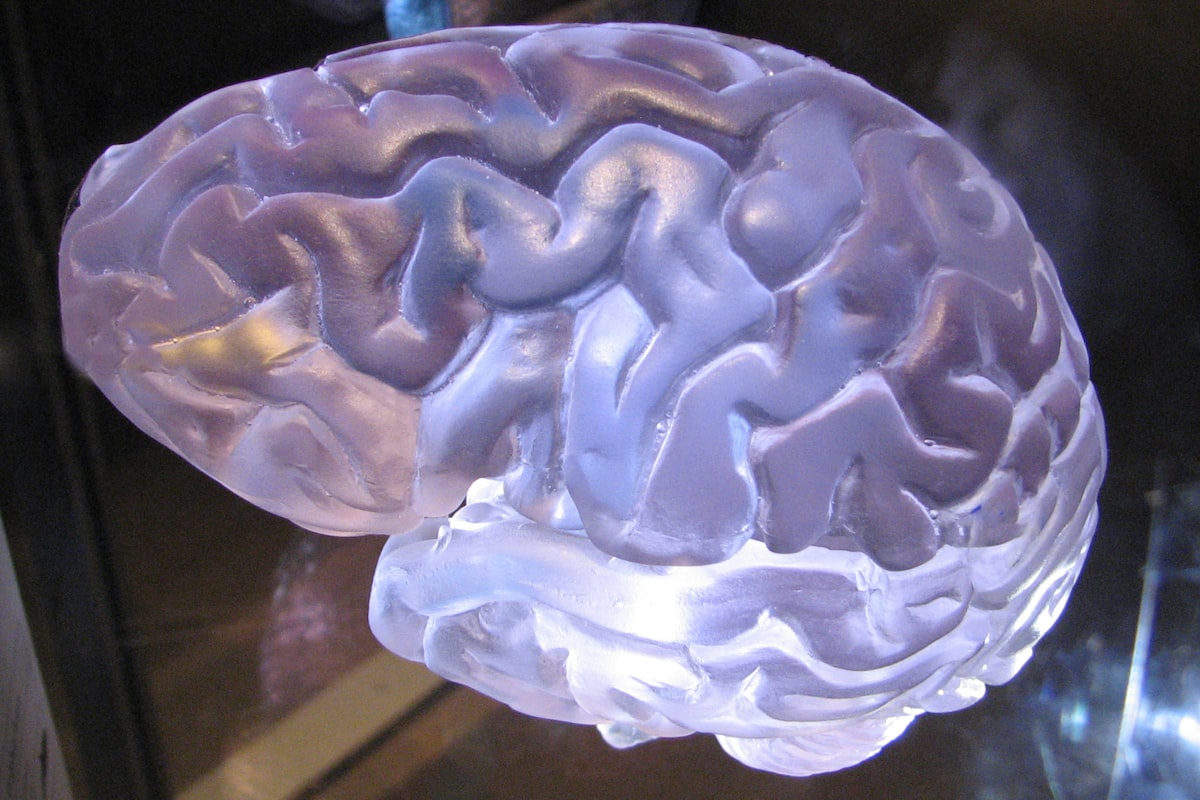
Is the left-handed brain different? Yes. Left-handers are more likely to have language distributed across both hemispheres and tend to have a slightly larger corpus callosum connecting the two brain halves.
These are statistical tendencies, not absolutes — the popular claim that left-handers are "right-brained" is an oversimplification.
Neuroscience has made real progress in mapping how handedness relates to brain organization. The findings are more subtle and more interesting than the cartoon version suggests. Understanding the neuroscience also helps clarify debates around topics like whether left-handers are more creative and what personality traits are associated with handedness.
Brain lateralization and handedness
The brain is not symmetric. Different functions tend to be handled more by one hemisphere than the other, a property known as lateralization. In most right-handed people, language is strongly lateralized to the left hemisphere.
Left-handers show more varied patterns. Research using functional MRI and other imaging techniques reveals three broad categories among left-handed individuals:
- About 70 percent still have language predominantly in the left hemisphere, just like right-handers
- About 15 percent have language predominantly in the right hemisphere
- About 15 percent have language distributed roughly equally across both hemispheres (bilateral representation)
By comparison, approximately 95 percent of right-handed people have left-hemisphere language dominance. The key takeaway is that left-handers are more variable in their brain organization, not that they are uniformly wired in the opposite direction.
Contralateral motor control
The brain controls the body in a crossed fashion. The left hemisphere controls the right side of the body, and the right hemisphere controls the left. This is why damage to one side of the brain affects movement on the opposite side.
For a left-handed person, the primary motor cortex in the right hemisphere is dominant for fine motor tasks. This much is straightforward. But the downstream implications for how the rest of the brain organizes itself are where things get complex.
The corpus callosum
The corpus callosum is the thick bundle of nerve fibers connecting the left and right hemispheres. Several studies have found that left-handed individuals tend to have a slightly larger corpus callosum, particularly in the anterior (front) regions.
A larger corpus callosum means more connections between the hemispheres, which could facilitate faster and richer communication between the two sides of the brain. Some researchers have speculated that this enhanced interhemispheric connectivity could contribute to certain cognitive strengths, though the evidence for specific advantages remains mixed.
It is worth noting that the size difference is modest. We are talking about a few percentage points on average, and there is substantial overlap between the distributions for left-handers and right-handers.
Language processing differences
Language is one of the most lateralized brain functions, and it is also where handedness-related differences are most clearly documented.
Evidence from the Wada test
Before the era of functional MRI, researchers used the Wada test to determine language dominance. This procedure involves injecting an anesthetic into one carotid artery to temporarily shut down one hemisphere while testing the patient's ability to speak.
Wada test data from thousands of patients confirmed the pattern described above: about 70 percent of left-handers have left-hemisphere language dominance, 15 percent have right-hemisphere dominance, and 15 percent have bilateral representation. These figures have held up remarkably well in subsequent fMRI studies.
What bilateral language means
Having language distributed across both hemispheres does not mean that a person processes language less effectively. In fact, some research suggests that bilateral language representation may come with certain advantages in tasks that require integrating different types of information.
However, bilateral language representation can be a disadvantage in specific clinical situations. If a left-handed person with bilateral language needs brain surgery, surgeons must be more cautious about which areas they can safely operate on, since language functions are spread more widely.
Spatial reasoning and the right hemisphere
The right hemisphere is generally associated with spatial processing, face recognition, emotional processing, and attention to the global structure of visual scenes. Some researchers have hypothesized that left-handers, with their greater right-hemisphere engagement for motor tasks, might show enhanced spatial abilities.
The evidence is mixed. Some studies find a small advantage for left-handers on certain visuospatial tasks, while others find no difference. A 2006 study published in Neuropsychology found that left-handers performed slightly better on tasks requiring mental rotation of three-dimensional objects, but the effect was small and not consistently replicated.
The broader point is that the right hemisphere handles many functions beyond just controlling the left hand, and having a more active right motor cortex does not automatically boost every other right-hemisphere function.
What neuroimaging reveals
Modern neuroimaging techniques have provided increasingly detailed pictures of how left-handed and right-handed brains differ. The genetic factors underlying handedness appear to influence brain structure through the same developmental pathways.
Structural differences
A large-scale 2019 study using UK Biobank brain imaging data from thousands of participants found several structural differences in left-handed brains:
- Greater symmetry in cortical surface area between hemispheres
- Differences in white matter tracts, particularly those connecting language regions
- Slightly different patterns of cortical thickness in motor and premotor areas
The authors emphasized that these differences are subtle and that the overlap between left-handed and right-handed brain anatomy is far greater than the differences.
Functional connectivity
Resting-state fMRI studies, which measure how different brain regions communicate when a person is not performing any specific task, have found that left-handers tend to show stronger interhemispheric functional connectivity. This aligns with the structural finding of a larger corpus callosum.
One interpretation is that left-handed brains are, on average, slightly less lateralized across multiple domains, not just motor control and language. This more distributed organization could make them more cognitively flexible in certain situations, though it might also make them more vulnerable to interference between competing brain processes.
Debunking the "right-brained" myth
The popular idea that left-handers are "right-brained" and therefore more creative, intuitive, or artistic is a distortion of the neuroscience. Here is why the myth falls apart:
- Most left-handers are still left-hemisphere dominant for language, the most studied lateralized function
- Creativity is not localized to one hemisphere. Neuroimaging studies of creative thinking consistently show activation across both hemispheres
- The left-brain/right-brain dichotomy itself is outdated. No credible neuroscientist today would describe someone as a "right-brain person" or a "left-brain person." Both hemispheres work together on virtually every task
What is true is that left-handers show more variability in brain organization. This variability is scientifically interesting, but it does not map neatly onto personality types or cognitive styles.
Handedness, neurodevelopment, and mental health
Researchers have investigated whether atypical brain lateralization in left-handers is linked to differences in neurodevelopmental conditions. The findings require careful interpretation.
ADHD and learning differences
Some studies have found modestly elevated rates of left-handedness among individuals with ADHD, dyslexia, and certain learning differences. The connection between left-handedness and ADHD has received particular attention, though effect sizes are small and the relationship is complex.
The hypothesis is not that left-handedness causes these conditions. Rather, the same developmental factors that produce atypical lateralization may also influence the neural circuits involved in attention, reading, and language development.
Psychiatric conditions
Some research has reported slightly elevated rates of left-handedness or mixed-handedness among individuals with schizophrenia and certain mood disorders. Again, the proposed mechanism involves disrupted lateralization during brain development rather than a direct causal link.
It is crucial to keep these findings in proportion. The vast majority of left-handed people have no neurodevelopmental or psychiatric conditions. The elevated rates, where they exist, are modest, and many studies have failed to replicate earlier findings.
Are there cognitive advantages?
The question of whether left-handers have cognitive advantages has produced a complicated and sometimes contradictory literature. Here is what the more reliable studies suggest:
- Divergent thinking: some studies find left-handers score slightly higher on tests of divergent thinking, which involves generating multiple solutions to open-ended problems
- Mental flexibility: enhanced interhemispheric connectivity may support faster switching between different cognitive strategies
- IQ: large-scale studies find no meaningful difference in average IQ between left-handers and right-handers
- Memory: some research suggests left-handers may have advantages in episodic memory, possibly related to their greater interhemispheric interaction
The effect sizes in all of these areas tend to be small. Any individual left-hander or right-hander could fall anywhere on the spectrum for any of these abilities. If you are curious about the broader question, the discussion of why people are left-handed provides additional context on the evolutionary pressures that may have maintained this variation.
Practical implications
For most purposes, the brain differences between left-handers and right-handers have no practical significance in daily life. Left-handers learn, work, and communicate just as effectively as right-handers.
Where the differences do matter is in clinical neuroscience. Surgeons planning brain operations need to know a patient's lateralization pattern, and left-handed patients require more thorough pre-surgical mapping because their brain organization is less predictable.
Frequently asked questions
Are left-handed people right-brained?
Not in any meaningful sense. About 70 percent of left-handers still have language dominance in the left hemisphere, just like right-handers. Left-handers do show more variability in brain lateralization, and their right hemisphere is dominant for fine motor control, but describing someone as simply "right-brained" is an oversimplification that modern neuroscience does not support.
What is the biggest brain difference between left-handers and right-handers?
The most consistently documented difference is in language lateralization. While about 95 percent of right-handers process language primarily in the left hemisphere, only about 70 percent of left-handers do. The remaining 30 percent show either right-hemisphere or bilateral language processing. Left-handers also tend to have a slightly larger corpus callosum, the fiber bundle connecting the two hemispheres.
Does being left-handed make you smarter?
No. Large-scale studies find no meaningful difference in average IQ between left-handers and right-handers. Some research suggests left-handers may score slightly higher on divergent thinking tasks, but overall intelligence is not associated with handedness in any reliable way.
Why does handedness matter for brain surgery?
Neurosurgeons need to avoid damaging critical language and motor areas during operations. Since left-handers have more variable brain organization, with about 30 percent showing atypical language lateralization, they require more extensive pre-surgical brain mapping to identify where essential functions are located. This reduces the risk of post-surgical speech or language deficits.